
💨 CO₂ Systems for Planted Tanks: A Beginner’s Complete Guide
CO₂ is one of the most important elements for planted aquariums. Carbon dioxide is essential for photosynthesis, allowing plants to convert light into energy. Without adequate CO₂, plant growth can slow down, leaves can yellow, and algae may take over.
Many beginners ask:
- Do I really need a CO₂ system?
- What types of CO₂ systems exist?
- How do I dose safely without harming fish?
This guide explains CO₂ basics, system types, and best practices for a thriving planted tank.
💨 Why CO₂ is Important
Plants need carbon dioxide to perform photosynthesis, which fuels their growth. In high-light tanks, the demand for CO₂ increases. Without it, plants may struggle, leading to slow growth and algae outbreaks.
Signs Your Tank May Need CO₂
- Slow or stunted plant growth despite proper lighting and nutrients.
- Yellowing or transparent leaves.
- Algae outbreaks, especially green dust algae or hair algae.
🛠 Types of CO₂ Systems
There are several CO₂ delivery methods for aquariums:
1. Pressurized CO₂ Systems
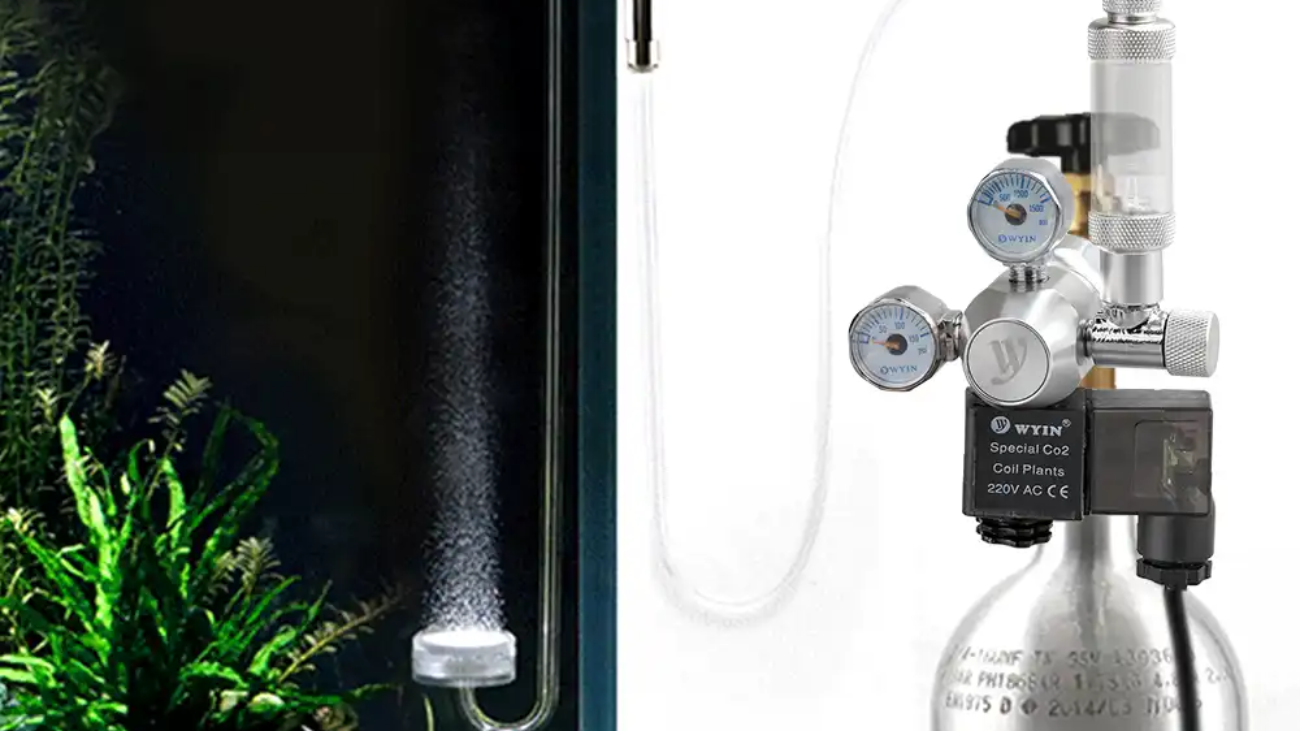
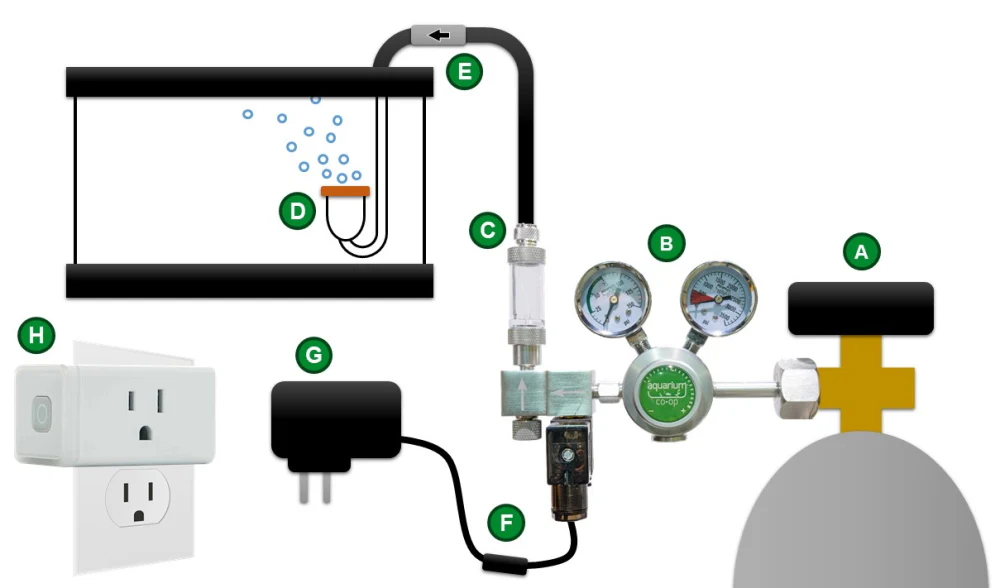
- Uses a CO₂ cylinder, regulator, and diffuser.
- Precise control over CO₂ levels.
- Best for medium to large tanks or high-light setups.
- Examples: JBL, Fluval, Dennerle CO₂ kits.
2. DIY CO₂ (Yeast-Based)
- Simple homemade CO₂ using sugar, yeast, and bottles.
- Good for small tanks or beginners on a budget.
- Less stable CO₂ output; requires monitoring and refills.
3. Liquid Carbon Additives
- No gas injection; CO₂ is provided as a liquid solution.
- Easy for beginners and nano tanks.
- Less effective than gas injection for heavy plant growth.
- Examples: Seachem Flourish Excel, API Leaf Zone.
📏 CO₂ Dosing & Monitoring
Proper CO₂ levels are essential to avoid harming fish while keeping plants healthy:
- Target CO₂ concentration: 20–30 mg/L for most planted tanks.
- Monitor with a drop checker or pH controller.
- Increase CO₂ gradually and observe plant and fish reactions.
- Turn off CO₂ at night — plants do not photosynthesize in the dark.
💡 Tips for Beginners
- Start small: Use a low-flow CO₂ diffuser in beginner tanks.
- Combine CO₂ with proper lighting and nutrients for optimal growth.
- Regular water changes prevent nutrient buildup and stabilize CO₂ levels.
- Observe plant health daily — yellowing or melting leaves may indicate imbalance.
- Always use aquarium-safe CO₂ equipment.
🌟 Recommended Beginner CO₂ Plan
A simple routine for a small to medium planted tank:
Pressurized CO₂ with diffuser: Start at 1 bubble/second and adjust gradually.
Check drop checker daily for color indication.
Maintain lighting at 6–8 hours/day with proper nutrients.
🌟 What’s Next?
Now that you understand CO₂, the next step is combining it with fertilizers and substrates to maximize plant growth. Stay tuned for our detailed guides:
🌿 Fertilizers & Nutrients Explained
🌱 Aquarium Substrates: Which One Should You Choose?